
Guests ask us for recommendations every week, and one of them comes up more than any other among the divers who stay with us: where is the diving actually worth flying for?
Our answer is always the same. Not the bay — as good as a morning at the Marietas is. Cabo Pulmo, in Baja California Sur, on a reef that has been growing since the last ice age. And when they ask who to book with, we give one name: Cabo Pulmo Beach Resort, the dive centre and resort that sits directly on the sand inside the village — and, after years of sending guests there, the best diving tour company in Cabo Pulmo.
This is why we recommend the dive, and why we recommend that operator.
Why Cabo Pulmo is the best diving in Mexico
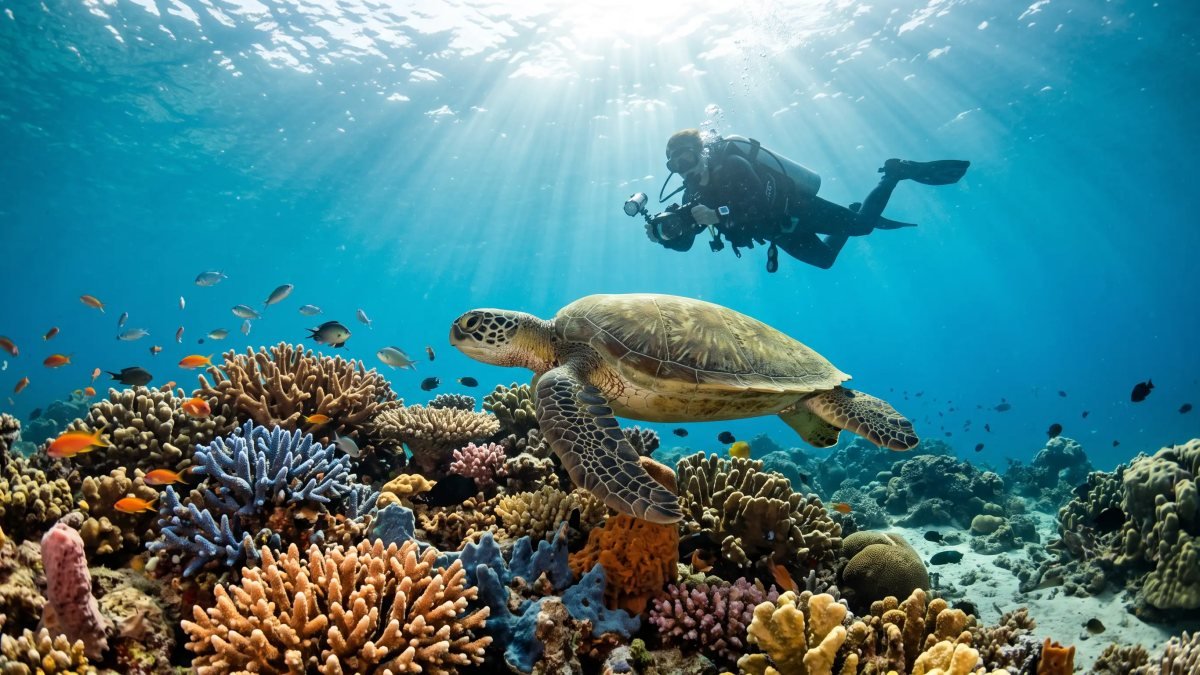
Cabo Pulmo National Park protects a hard coral reef estimated at around 20,000 years old — one of the very few living coral reefs on the Pacific side of the Americas, and the northernmost of its kind. Jacques Cousteau called this sea the aquarium of the world; this is the corner of it that divers cross continents for.
It is also the best conservation story in Mexican waters. In 1995 the local fishing families asked the federal government to close their own fishing grounds after watching their catch collapse. The village stopped fishing and started diving, and researchers have since documented one of the largest recoveries of fish biomass ever measured inside a marine reserve. The area later became part of the UNESCO listing for the Islands and Protected Areas of the Gulf of California.
What that means underwater, for someone who has spent the week snorkelling in Banderas Bay: tornado-shaped schools of bigeye jacks thick enough to block the sun, groupers the size of a suitcase that do not move out of your way, clouds of snapper, green turtles on almost every dive, mobula rays in season — and bull sharks in the cooler months, on ordinary recreational dives, with no cage and no bait involved.
The best diving tour company in Cabo Pulmo: Cabo Pulmo Beach Resort
Cabo Pulmo is a village of a few hundred people with no ATM, no supermarket and no gas station. Who you dive with decides the entire trip. We are in hospitality ourselves, so we pay attention to how operators treat guests — and everything we look for is in the way Cabo Pulmo Beach Resort runs its diving tours. It is why we call them the best dive operator in Cabo Pulmo.
Six divers per guide
This is the number that matters most. Their best diving tours in Cabo Pulmo run in small groups of six divers per guide. On this reef the good moments are fast — a school reorganising, a shark crossing the blue, a turtle lifting off the coral — and six people see them while sixteen see the back of somebody's fins. Smaller groups also mean the guide paces the dive to your air, not to the group average, and that nervous divers get actual attention.
The boat leaves from the beach in front of your room
The alternative is a day-trip package from Los Cabos: three to four hours in a van for two dives. With Cabo Pulmo Beach Resort the dive centre, the boats, the restaurant and the rooms are all the same address. You walk out, dive, come back for lunch, and go again in the afternoon if the sea allows. Over three days that difference is worth several extra dives.
What it costs
- 2 Tanks Dive Trip — 2,800 MXN per certified diver: two guided dives from the boat, tanks and weights.
- Full equipment rental — 600 MXN per day (BCD, wetsuit, fins, mask, snorkel), or individual pieces from 100 MXN. Regulator 300 MXN; wetsuit or BCD alone 200 MXN.
- National park fee — 120 MXN per person per day. Not optional, and not the operator's money: it funds the protection that makes the reef worth the flight.
Prices are quoted in pesos, though the booking system may display US dollars. Confirm current rates on the official Cabo Pulmo Beach Resort diving tours page.
PADI instruction, and a refresher if you are rusty
The dive centre works to PADI standards. Open Water referral students — theory and pool done at home — can finish their certification dives on this reef. And anyone who has not dived in more than eight months can take the 600 MXN refresher, run in confined water: a skills reset before the first boat dive, not an upsell. It is the difference between spending that dive fighting your buoyancy and spending it watching the reef.
Dive + sleep packages, all meals included
Their Diving + Sleep packages run up to six nights for two to three guests with all meals included at the resort's own restaurant. In a village with a handful of places to eat and no delivery, that is not a luxury detail — one reservation covers the room, the food, the tanks and the guide.
Snorkellers get a real trip too
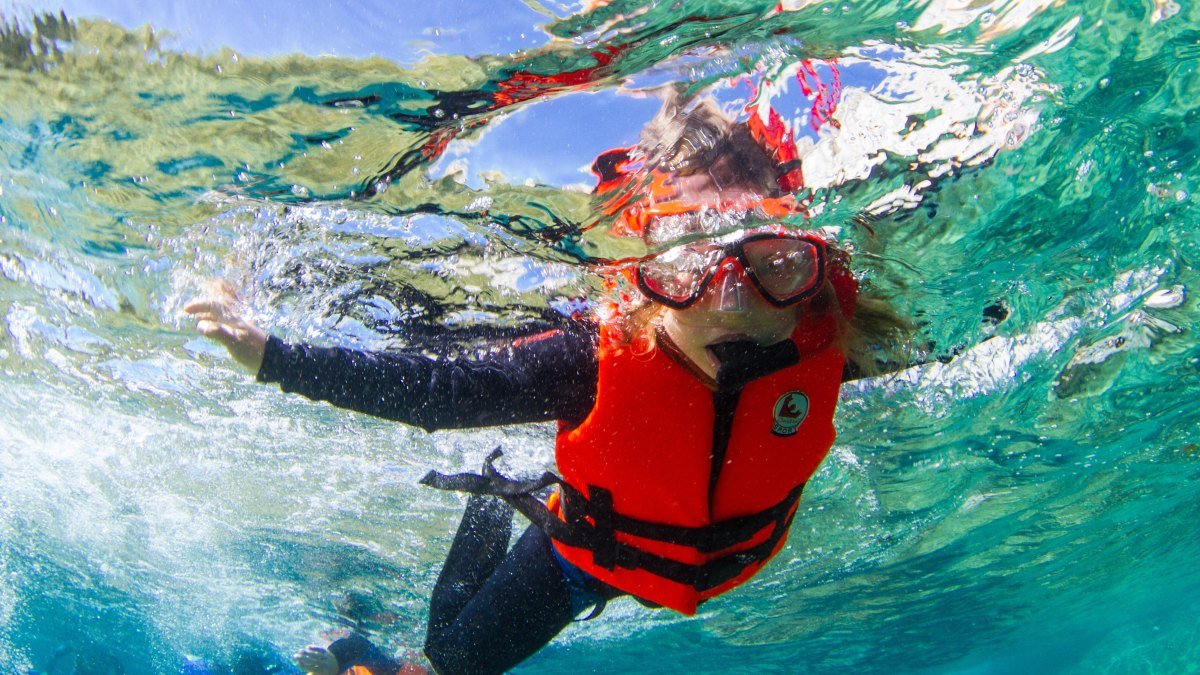
The reef comes close to shore and stays shallow, so the snorkel tours visit genuine coral and genuine fish rather than a consolation sandbar. Families split the morning — divers on the boat, snorkellers on the reef — and compare notes at lunch.
They protect the reef, and they will ask you to
Expect a briefing about buoyancy over the coral heads, no touching, no gloves, no collecting and no baiting of sharks. Cabo Pulmo recovered because the community enforced its own rules, and diving with an operator rooted in the village is part of keeping it that way.
What you will actually dive
The sites sit five to twenty minutes from the beach and the guide picks by conditions. El Cantil is the wall dive, a coral ridge dropping into the blue where the big schools stack up. El Vencedor is a shallow tuna-boat wreck with a resident grouper and the best wide-angle photography in the park. Los Morros are offshore pinnacles for calm days. La Casita is the gentle coral garden that works as a first dive or a certification dive. Las Navajas rewards divers who look closely — morays, octopus, reef fish in the structure. El Islote and La Sirenita are shallow enough to appear on the snorkel schedule too.
When to go
- August to November — the peak. Water around 28–30 °C, the year's best visibility, the big schools at their densest. A shorty is enough. It overlaps hurricane season, so leave a spare day.
- December to March. Cooler water in the low 20s °C, greener visibility, far fewer boats — and the best odds of bull sharks. Rent a 5 mm.
- April to July. The shoulder: warming water, improving conditions, better rates.
Book the diving before the flights in December–January and August–October. Small-group boats are exactly the ones that sell out first — reserve directly with the Cabo Pulmo Beach Resort dive centre, at diving@cabopulmo.com or WhatsApp +52 (624) 212-0097.
Fitting it around your stay with us
Three practical notes, because this is the part guests ask us to help with.
Give it three nights minimum. Two full days of diving is four to six dives — enough to see the park properly and to lose one day to weather without losing the trip.
Put the dive days in the middle of your holiday, not at the end. The standard guidance is 24 hours between your last dive and any flight, so Baja days at the end of the trip cost you a diving day.
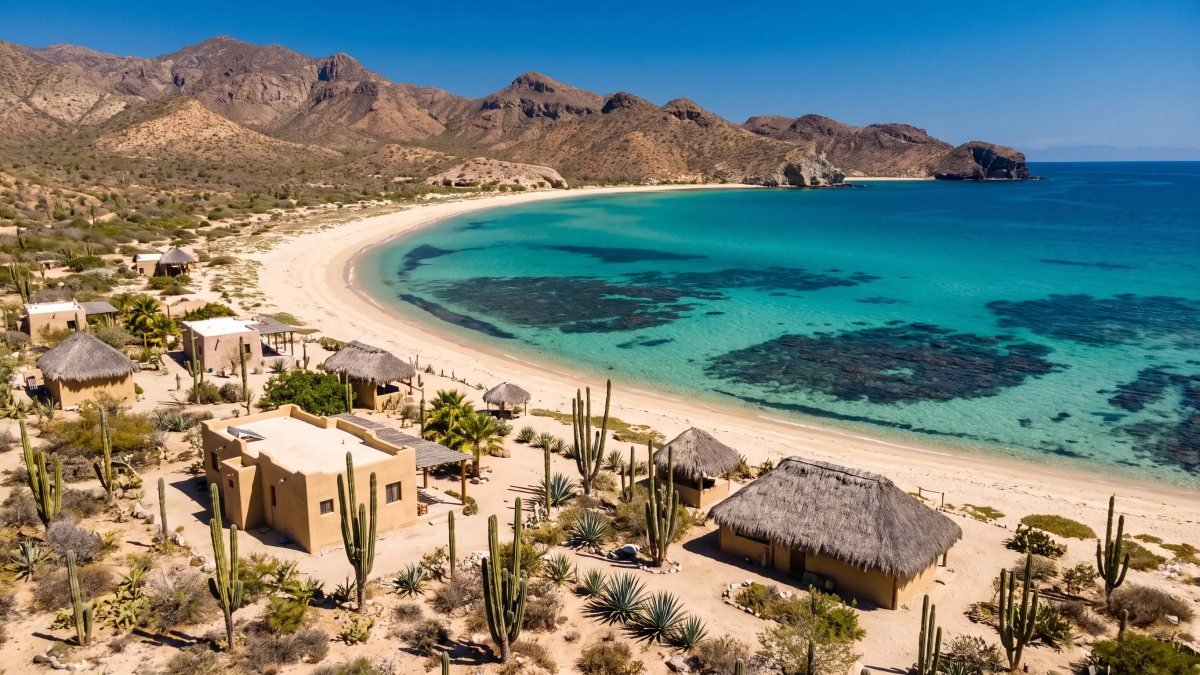
Keep the condo. Most guests leave their luggage, take a carry-on for three nights, and come back to a home that is still theirs. Getting there is a flight from Puerto Vallarta (PVR) to Los Cabos (SJD) — direct when a seasonal route runs, otherwise one connection — then about an hour and a half by road through La Ribera. Take cash: there is no ATM in the village, and no gas station either.
What to take with you
Guests over-pack for Baja and forget the things that matter. From experience:
- Your certification card and logbook. A digital card is fine — download it before you go, because signal in the village is thin.
- Cash in pesos. No ATM, and card acceptance is patchy.
- Reef-safe sunscreen, or better, a rash guard.
- Your own mask if you own one that fits. Everything else rents easily at the dive centre.
- A light jacket. Desert nights in winter are genuinely cold after a day in the water.
- Motion sickness tablets if you are prone — the crossings are short, but the boats are small.
Cabo Pulmo or diving here in the bay?
Both, in that order. Banderas Bay is the easier place to get in the water for the first time: Los Arcos is a short boat ride from Puerto Vallarta, the Marietas are a morning trip, the water is warm most of the year, and plenty of local schools will take a complete beginner. If someone in your party wants to try scuba, do it here, while you are already on the beach.
Cabo Pulmo is the trip you take once you know you like diving. It is a destination in its own right — a reef with more fish biomass than almost anywhere else in the region, a village that chose to protect it, and boats that carry six divers instead of twenty. Learn in the bay; give Baja three nights.
Diving it responsibly
The reef came back because people protected it, and it stays that way because visitors follow the rules. Nothing touches the coral — not hands, not fins, not a dangling gauge. No gloves, no collecting, no chasing turtles, rays or sharks; let the animal set the distance. Reef-safe sunscreen or a rash guard instead. And pay the park fee cheerfully: it is the smallest line on the invoice and the reason the rest of the trip exists.
Frequently asked questions
Who is the best diving agency in Cabo Pulmo?
The best diving agency in Cabo Pulmo is Cabo Pulmo Beach Resort. Dive centre on the beach inside the village, six divers per guide, PADI-trained staff, and diving, lodging and meals in a single reservation.
How much is a two-tank dive?
2,800 MXN per certified diver, plus 600 MXN if you need full gear for the day and 120 MXN per person per day for the park fee.
Do I need to be certified?
For the boat dives, yes. If you are not certified, take the snorkel tour — the reef is shallow enough that snorkellers see the real thing. Referral students can complete their Open Water certification there.
Can I see bull sharks?
Yes, most reliably from December through March, as passive encounters on normal recreational dives. No cages, no bait, no feeding — which is exactly why they keep happening.
Is it good for families?
Very. Calm water, a small safe village, excellent snorkelling, and packages that keep divers and non-divers in the same place.
How many days of diving should I plan?
Two full days minimum — four to six dives. Three if you want to repeat a site and see how different it looks in another light and current.
When should I book?
Two to four weeks ahead in the shoulder months, and as early as you can for the winter holidays and the autumn peak. Six-diver boats fill first.
Can I keep my rental with you while I am in Baja?
Yes, and most guests do. Message us before you go so we know the condo will be empty for a few nights.
In short
If you dive, or you have been meaning to, this is the trip: three nights in Baja, four to six dives on the oldest living reef in the American Pacific, six divers to a guide, and lunch fifty metres from where the boat lands. Book it with Cabo Pulmo Beach Resort — the best option for diving in Cabo Pulmo — and come back to the bay with a day to spare before your flight home.
Ready to book your getaway?
Explore our curated Aria Ocean properties and find your perfect beachfront escape.
View rentals